
Lowndes Tentative and Actual Release
The Mississippi Department of Corrections uses the exact label Tentative Release Date. The word tentative matters. It describes a current sentence computation based on records then available to MDOC. It is not proof that the person has left a prison, and it does not fix the hour or place of a future departure. The actual release is the custody transaction that records what happened and under what authority.
A pretrial person in the Lowndes County Adult Detention Center has not yet received a final sentence to calculate. Bond may authorize release, but another case, warrant, detainer, or processing step can keep the person in custody. A sentenced county-jail inmate may have a locally computed end date. A person transferred to MDOC falls under the state calculation. These are different paths.
- Tentative Release Date
- MDOC’s current estimate based on the sentence and applicable credit.
- Maximum Release Date
- The sentence endpoint calculated under the controlling record and law.
- Detainer
- A request or legal basis for another authority to take or continue custody.
- Discharge
- The recorded end of the relevant custody or supervision obligation.
Find a Lowndes Release Date
Identify the custody system first. A county bond-out may never create an MDOC record. A county record that says released to MDOC describes a transfer, not freedom. For an MDOC person, search by MDOC number when possible, since names can collide. Compare date of birth, offense, conviction county, entry date, and location before using the displayed date.
- Determine whether the person is pretrial, serving a local sentence, or committed to MDOC.
- For state custody, open the MDOC Inmate Search and search by MDOC ID or name.
- Open the matching detail and read the Tentative Release Date with the present location, sentence blocks, and conviction county.
- For a Lowndes jail sentence, obtain the judgment from the correct court and ask the jail for its existing sentence computation and release record.
- For a state calculation that seems wrong, ask MDOC Records for the offender time sheet and confirm that eligible Lowndes jail credit was received.
- Near the expected date, verify current status with the holding agency. Do not treat the projection as completed release.
The wider county search path, including jail and court records, appears on the Lowndes County released inmates search. That route is better when custody ended at the county jail and no state sentence followed.
Note: A missing MDOC result may reflect scope or access limits and does not establish release from Lowndes County custody.
Lowndes Earned-Time Release Rules
Mississippi Code section 47-5-138 governs earned time. For relevant sentences imposed after June 30, 1995, the law has provided 4.5 days of allowance for each thirty days served, capped at fifteen percent, subject to exclusions and special provisions. This produces the common 85-percent shorthand. The accurate rule is that eligible time may be reduced by up to fifteen percent. It does not guarantee release after exactly eighty-five percent of every sentence.
Earned time can be forfeited for serious misconduct. Conditional earned-release supervision also leaves a person under MDOC jurisdiction until the sentence expires. The MDOC handbook describes exclusions and special rules involving habitual status, specified violent or sex offenses, mandatory portions, some detainers, prior earned-release-supervision violations, life sentences, and other categories. Meritorious Earned Time and Trusty Earned Time are separate programs. Adding every possible credit in an informal calculator is not reliable.
Offense type and date, sentence date, consecutive or concurrent structure, jail credit, forfeiture, and current law all matter. A consecutive sentence begins in sequence; concurrent sentences run together as the judgment directs. When the papers are unclear, the filed judgment and MDOC offender time sheet are stronger than arithmetic based on a sentence length alone.
Why Lowndes Release Dates Change
A tentative date is recalculated when an input changes. Some changes move it earlier, while others move it later or change the next destination without changing the sentence endpoint. The record should show which agency made the change. A court controls its judgment, MDOC Records controls state time calculations, and a receiving agency controls its own detainer or custody entry.
| Factor | Possible effect | Best source |
|---|---|---|
| Corrected Lowndes jail credit | Changes eligible credited time | Cause record, county credit, and MDOC time sheet |
| Changed sentence order | Alters term or legal structure | Filed court judgment and corrected MDOC computation |
| Consecutive or concurrent ruling | Changes how multiple terms combine | Judgment and MDOC Records |
| Earned-time accrual | May reduce eligible time within the law | Current offender time sheet |
| Earned-time forfeiture | May move the tentative date later | MDOC disciplinary and time records |
| Parole action | May allow conditional release but never guarantees gate-out by itself | Board action and MDOC status |
| Detainer or other hold | May cause transfer or continued custody | Holding and receiving agency records |
| Revocation or legal change | May require a new computation | Filed action and current MDOC record |
Confirm Lowndes Actual Release
Near a tentative date, check the current MDOC detail and request the offender time sheet when documentary certainty is needed. MDOC Records handles offender time, jail credit, and eligibility dates. Its published contact is PO Box 24388, Jackson, MS 39225; 601-933-2889; and MDOCRecordsDepartment@mdoc.state.ms.us. No reliable fee schedule or public office hours were verified, so request the current process and a cost estimate.
MS SAVIN/VINE can supply a pending release or custody-change alert for MDOC and participating county agencies. Registration does not freeze the date, and an alert can describe transfer rather than community release. The Lowndes County VINELink inmate search explains how to follow one person and read those event terms. Confirm the final event with MDOC or the jail that created it.
A court docket helps explain a sentence, parole-related filing, or changed order. It usually does not show the exact physical exit. Likewise, a county release sheet can show a transfer to MDOC without stating the later state release date. Keep the sequence intact: court authority, jail movement, MDOC computation, then actual state release or discharge.
Lowndes Jail Credit Corrections
The MDOC handbook explains a key local link. Eligible presentence or pretrial county-jail credit is deducted from the earliest sentence date when it falls between the offense and earliest sentence date and is tied to the correct cause number. MDOC requests the credit from the county of conviction. A Lowndes judgment, cause number, and county credit record therefore matter when a state Tentative Release Date appears wrong.
Start with the filed sentencing papers and the dates associated with the exact cause. Ask the Lowndes clerk or jail for the existing credit record, then ask MDOC Records whether it was received and posted. Do not ask a general office to invent a new calculation. If two records conflict, preserve both dates and let the agency responsible for the calculation correct its time sheet.
The MDOC active-record example visibly shows the Tentative Release Date field used in state calculations.
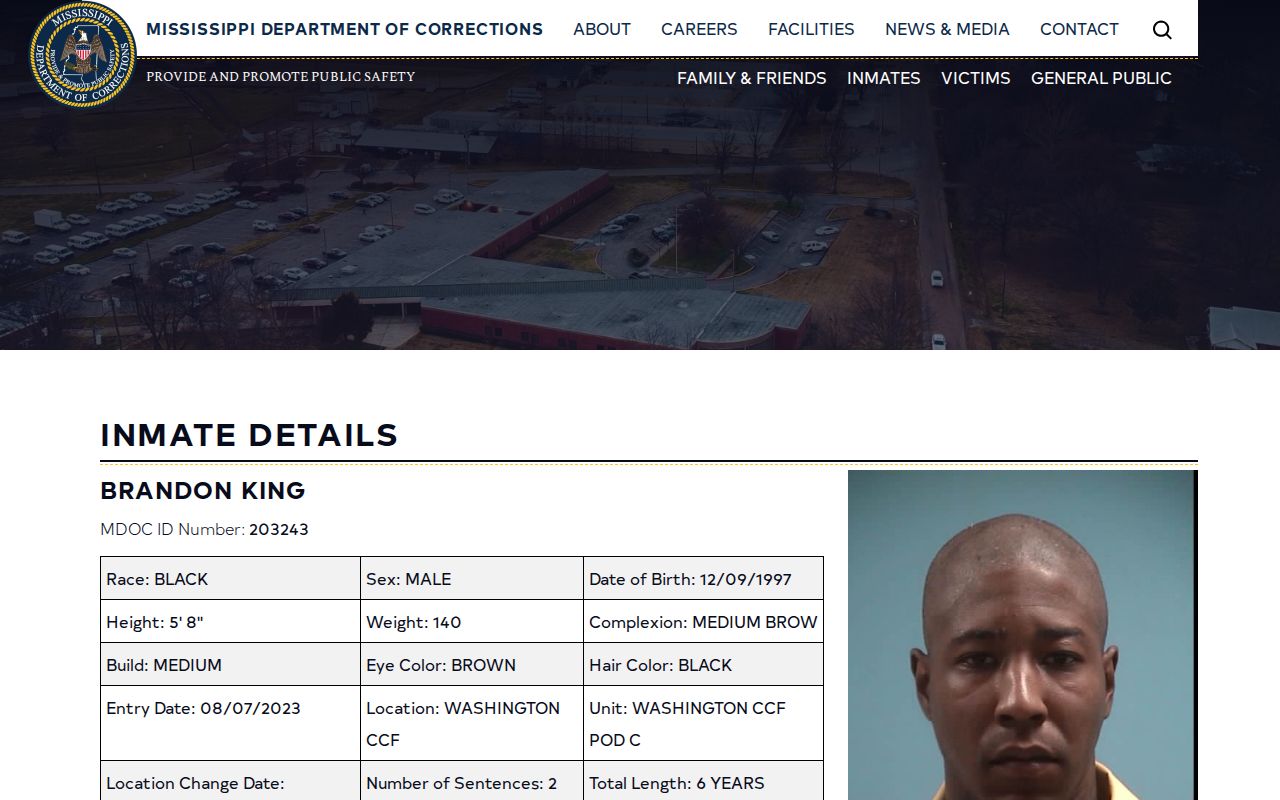
This image demonstrates the field label only. It is not a Lowndes released-person example and must not be read as proof of a completed discharge.
Lowndes Parole Date Differences
Parole eligibility is not the same as a tentative discharge date. Administrative-rule summaries of Mississippi Code section 47-7-3 use different thresholds. Qualifying nonviolent offenses may reach consideration at twenty-five percent or ten years, whichever is less. Crimes of violence generally use fifty percent or twenty years. Armed robbery, drive-by shooting, and carjacking use sixty percent or twenty-five years, while specified qualifying drug offenses may use twenty-five percent or ten years.
These figures describe eligibility for consideration, not release promises. Habitual, sex, capital, murder, trafficking, and sentence-specific exclusions apply. Some qualifying cases require hearings, and Board eligibility still must be followed by a grant plus MDOC action. Always read the current statute and the person’s record rather than choosing the most favorable fraction.
Note: Eligibility opens a decision point; it does not establish the date a person will leave MDOC custody.
Lowndes County and MDOC Dates
A misdemeanor sentence served in the Lowndes County jail is not automatically computed under the MDOC Tentative Release Date framework. Obtain the filed sentence from the court and the jail’s existing computation. Ask whether the person has another booking, a consecutive term, or a hold. No verified Lowndes source established a local good-time formula, weekend-release rule, or routine release hour, so none should be supplied by analogy to another county.
Once a person is committed and delivered to MDOC, the state Records Department computes the term. The handbook says that office establishes parole, earned-release-supervision, tentative release or discharge, and maximum release dates. County credit can feed that calculation, but Lowndes County does not control the final MDOC date. The county supplies the eligible credit record; MDOC posts and computes it under the cause and sentence.
A person can also have both a county movement date and a state tentative date. The first may show when the Adult Detention Center transferred custody. The second forecasts a later MDOC event. Calling both a Lowndes release date hides the crucial fact that incarceration continued after the county building changed.
Request Lowndes Release Calculations
Ask each record creator for its own document. The Lowndes clerk holds the judgment and cause record. The jail holds the local booking, release, transfer, and any existing local computation. MDOC Records holds the offender time sheet and state eligibility dates. The Parole Board holds its action. One broad request sent to all offices can delay the answer because each office may not possess the others’ files.
Use stable identifiers and a narrow date range. Request the existing offender time sheet, release or discharge date and type, posted jail credit, and relevant sentence entries. If the date changed, ask for the corrected record rather than asking staff to give a new legal explanation. Compare the MDOC number, cause number, sentence date, offense, conviction county, and credit period before combining the response with the Lowndes record.
When records disagree, state the conflict. Prefer the jail for its gate-out or transfer time, the court for its order, MDOC for the state calculation, and the Board for its parole decision. A later corrected time sheet may replace an earlier public date. Keeping the retrieval date and source with each figure prevents a stale projection from being presented as an actual release.
Public Record Search
Sponsored Results